There is something deeply transformative about a child planting a seed. It is an act of faith, a commitment to tending something over time, of being present for a process that cannot be rushed or skipped.
In BetterLife International Organization's school garden programme, that act of planting is the beginning of an education that no textbook alone can provide.
Since its establishment, BetterLife has developed and supported school gardens across Uganda, South Sudan, and Tanzania as part of its broader commitment to reaching over 20,000 students with practical sustainability education.
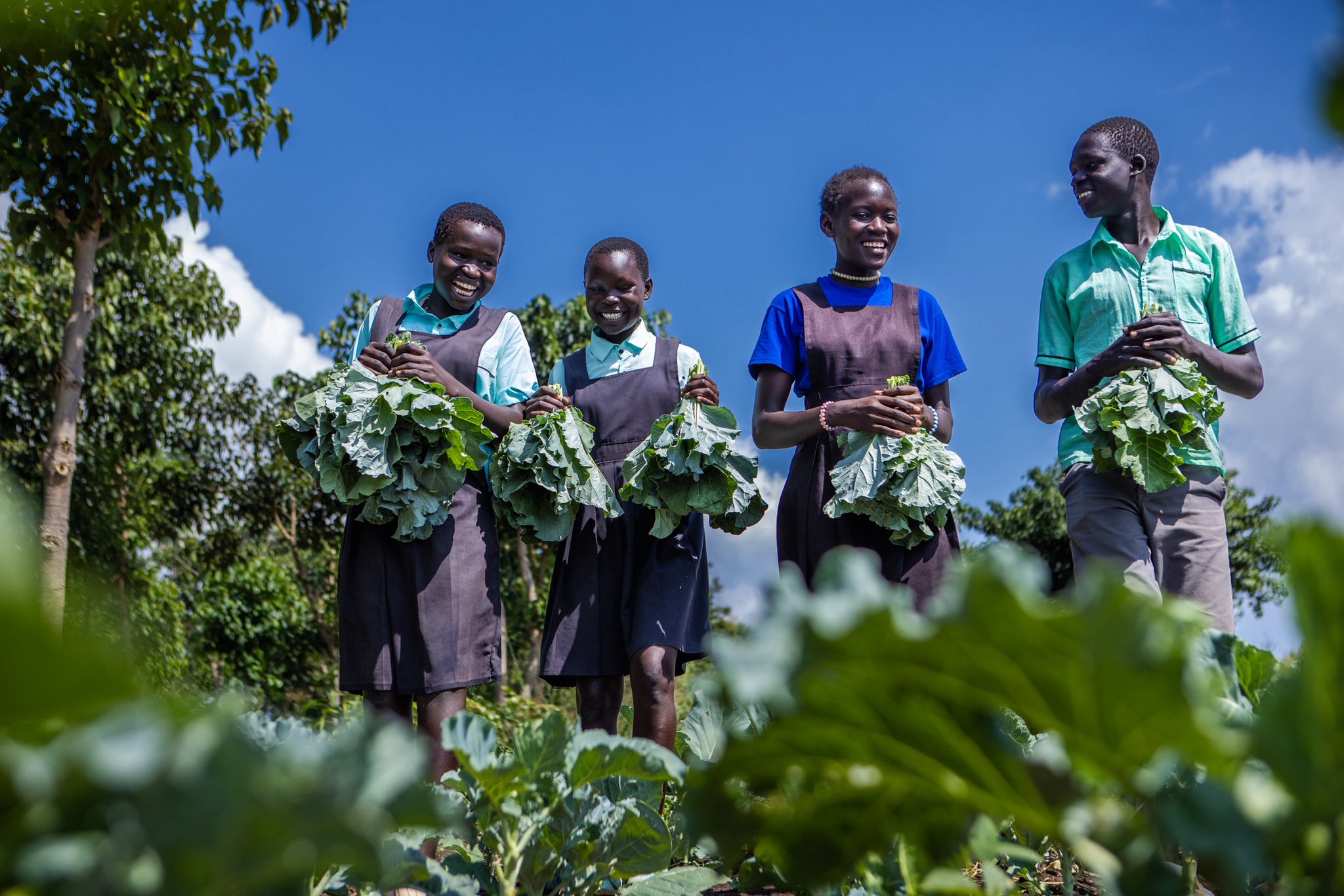
These gardens are not ornamental. They are working food production plots, managed by students under the guidance of trained teachers and BetterLife extension officers, producing real vegetables that feed real children.
The programme is designed to address two interconnected crises: child malnutrition and disconnection from food systems. In many of the communities BetterLife works in, children have little understanding of where their food comes from or how it is grown.
Ultra-processed, imported foods often displace traditional, nutritious crops. And school feeding programmes, where they exist, rely on food that must be purchased rather than grown.
BetterLife's school gardens change that equation. Students grow leafy vegetables, legumes, root crops, and fruits, which are staples of a healthy East African diet, directly on school grounds.
The produce supplements school meals, improving their nutritional quality without adding significantly to school budgets. In some schools, surplus produce is sold, generating funds for school materials or reinvestment in the garden itself.
"Our children used to eat just posho and beans every day," explained a headteacher at a partner school in Central Uganda. "Now they eat vegetables from the garden: kale, tomatoes, cabbage, pumpkin. Their concentration has improved.
The teachers notice the difference." The link between nutrition and learning outcomes is well established in research, and BetterLife's school gardens are making that link tangible.
The educational component of the programme extends far beyond practical horticulture. Students learn about soil ecology, the water cycle, composting and organic waste management, seed saving, and the relationship between biodiversity and food security.
Climate change is woven into every lesson: students are taught to observe seasonal changes, understand the effects of erratic rainfall on crop yields, and think about how farming must adapt to a warming world.
BetterLife also trains teachers in participatory pedagogy, moving learning outdoors, using the garden as a classroom, and integrating food production into subjects including science, mathematics, and social studies.
Teachers report that students are more engaged when learning is connected to tangible, real-world outcomes. Attendance improves, curiosity deepens, and children carry what they learn home, sharing new knowledge with parents and siblings.
Beyond the garden, BetterLife's school programme includes robotics clubs, climate awareness campaigns, and environmental competitions, creating a rich ecosystem of learning that connects food, ecology, technology, and community.
It is education for life: not just preparing students for examinations, but preparing them for a world that urgently needs skilled, caring, and knowledgeable stewards of the land.